
Blog post
Venezuela – a coup for the oil companies?
The major American oil companies – Exxon, Chevron and Conoco Phillips - have been pushed to the front of the stage by President Trump over the last two days.
Blog post
Venezuela – a coup for the oil companies?
The major American oil companies – Exxon, Chevron and Conoco Phillips - have been pushed to the front of the stage by President Trump over the last two days.
On Saturday, just hours after the coup in Caracas he announced that “ We’re going to have our very large United States oil companies, the biggest anywhere in the world, go in, spend billions of dollars, fix the badly broken infrastructure and start making money for the country.” This is not likely to match the companies own view of their role.
The American assault on Venezuela will have come as no surprise – the companies’ networks within the US Government are extensive and the US military is one of their major customers. The known unknown for the companies is what happens next.
The international oil industry has a long history in Venezuela dating back to 1922 when oil was discovered at Lake Maracaibo by Royal Dutch Shell leading to a joint development with Standard Oil of New Jersey and it’s local subsidiary Creole – entities which later became Exxon.
The companies saw their assets nationalised in 1976 but retained trading relationships not least with the state company PDVSA until the Chavez Government in Caracas took direct control of what had been a highly professional and respected business. Only Chevron has retained a small and minor interest and works under a specific but highly restrictive exemption from US sanctions.
Returning to Venezuela has long been an aspiration for the oil industry because of the extensive reserves, running to over 300 bn bbl of oil, which remain to be developed. Until now any return has been no more than a distant possibility. President Trump in his statement on January 2nd said that regaining the assets stolen from the companies (and therefore in his view stolen from the United States) through nationalisation was a primary objective of the intervention – an assertion not repeated in any statement from the companies themselves.
The companies know President Trump and undoubtedly prefer his support for the oil industry to the ambivalence of his predecessors and opponents but will not appreciate his attempt to co-opt them as enforcers of an ill-defined policy under which “America will run Venezuela”
The immediate response will be extremely cautious.
Any corporate involvement will be dependent on the clarity of governance in Caracas. President Trump’s stated policy is to establish a new legitimate Government but that will take time and for the oil companies and many other potential investors what matters is who is charge now. President Trump created confusion by suggesting that President Maduro’s Vice President Delcy Rodriguez was “presumably now in charge… and would hold power in Venezuela as long as she does what we want”. Mrs Rodriguez is no friend of the US and has already condemned what has happened to Venezuela as a barbarity”.
As things stand, the rest of the Maduro regime is still in place including the all powerful and highly corrupt military forces which have protected Maduro and his predecessor Hugo Chavez for so long. It is inconceivable that the old regime will allow the US oil industry to take over Venezuela’s primary national asset. Regime change must be a complete process to be effective but it is not clear if the US has the will to complete the process it has begun.
Even if a new Government is imposed in the next few days the companies will be wary of putting their staff in harm’s way and will require full scale protection for any presence on the ground in the face of potential local resistance. President Trump has said he “is relaxed about boots on the ground” but a long term presence would be expensive and risky and runs contrary to the opposition to the US making external commitments and “nation building” across much of the MAGA movement. Venezuela is twice the size of Iraq.
The companies are certainly capable of undertaking a detailed assessment of the state of the oil industry within Venezuela and of rebuilding the facilities where necessary. They will, however, very quickly raise the question of who pays for such work. The companies will be wondering whether the US Government has the appetite for a sustained security presence and a multi year reconstruction programme.
From all available reports the condition of the existing production facilities, pipelines and other infrastructure is desperately weak and has a been a primary cause of the steady decline in oil production over the last decade. Twelve years ago Venezuela was producing 2.4 to 2.5 million barrels of oil every day. The figures now is below 1 million.
Reconstruction will be a costly process but will also take time. Many skilled staff from the industry have emigrated to escape the Maduro regime over the last decade and are not likely to be rushing to give up their new lives in the US and elsewhere to return home. It will take years to recreate the skill base on which PDVSA and the wider energy industry in Venezuela were built.
It is hard to see how, even in an orderly political environment, oil production can be raised by more than a few hundred million barrels a day within the next two years. If US attacks on tankers carrying Venezuelan oil are called off prices could fall a little in the net few weeks but the companies will be amused rather than worried by ill informed speculation that world oil prices will collapse on the prospect of Venezuela restoring production to 3 million barrels a day or more.
The concerns of the industry will extend more widely. Although firmly based in the US, the American majors are global businesses and if the American action in removing Maduro provokes serious hostility American corporate assets could be targeted. All the companies have interests across Latin America. Exxon for instance has extensive interests in Guyana, the site of some of the world’s most extensive recent oil discoveries.
The companies may also be concerned that the American take over of Venezuela threatens the interests (including substantial debts) built up there in recent years by China. Some estimates put the scale of Chinese investments and debts at more than $ 100 bn. All this supports the view that the immediate corporate response to what has happened will be extremely cautious as reflected in Chevron’s careful statement.
Against that, however, it is important to remember that the industry and particularly the oil majors think in decades rather than days. On a twenty year horizon a return to Venezuela, if the country can be stabilised, will be seen as a tremendous opportunity for open access to a new source of resources – not just of oil and gas but also of the strategic minerals which are important for the industries of the future.
There has been no thorough survey meaning that all estimates are speculative but Venezuela’s Guyana shield geology in the south of the country is believed to hold substantial reserves of gold, iron ore, copper, nickel, cassiterite, niobium and other valuable minerals. Access to Venezuela on the right terms will be seen as far more attractive in the long term than access to the other resource rich areas currently closed off to international investment such as Russia or Iran.
The military intervention in Venezuela has demonstrated America’s power and the willingness of President Trump to use that power regardless of the niceties of international law. Around the world many other countries – friends and foes – will be adjusting to that reality. Military force in itself, however, cannot produce instant results but if accompanied by a sustained plan to rebuild not just the oil industry but also the governance of Venezuela, the removal of the Maduro Government could help build America’s own economic and industrial strength in the face of the continuing challenge from China.
Recent history suggests that the US is not interested in nation building. In Gaza a sort of ceasefire has been established but the need for reconstruction is being completely neglected.
The benefits of regime change in Venezuela, however, can only be delivered if the nation is rebuilt. It is hard to see how that can be done without active and sustained American engagement. For Venezuela and the companies now expected to go in and invest billions so much now depends on how President Trump and his Government manage the Day After.
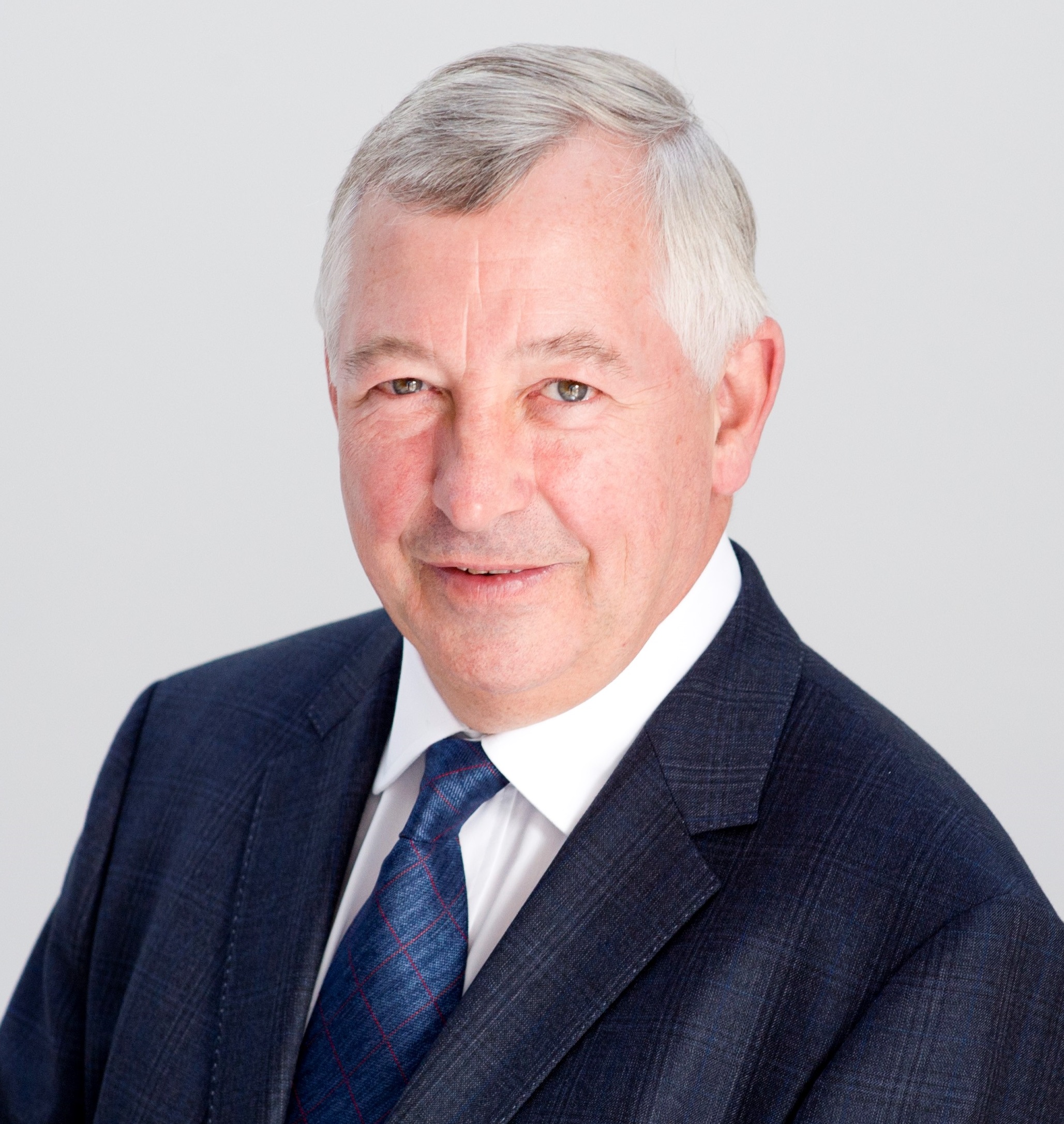
By Nick Butler, Energy expert and Visiting Professor at King's College, London.